
There’s a common misconception that a website is a “set it and forget it” project. For years, you could launch a site, keep it updated with a few blog posts, and wait for the phone to ring. But as we move into 2026, that era is officially over. The intersection of AI-driven search, hyper-local consumer skepticism, and a massive shift in how people interact with mobile devices has created a “perfect storm” for business owners.
If you are noticing that your competitors are outranking you, or if your site feels like a “digital ghost town” despite having decent traffic, you are likely falling behind on one of the five major shifts currently redefining our market. If you are currently in the research phase, it’s vital to learn how to tell when it’s time to redesign your website before you sink more money into a platform that is fundamentally broken for the 2026 environment.
At Imagine Designs & Marketing, we live by a simple mantra: “Real Strategy. Real People. Real Results.” To help you navigate this new landscape, we’ve broken down the five most critical web design trends for 2026. This isn’t just about what looks good; it’s about what works in the real world.
1. The Death of the Stock Photo: Moving to Evidence-Based Design
The most immediate change you’ll notice in websites this year is the absence of “plastic” perfection. For over a decade, stock photography was the industry standard. It was cheap, easy, and safe. However, in 2026, stock photography has become a liability.
Why Stock Photos Kill Conversions
Your customers have developed a “BS detector.” When someone in the Beltline is looking for a plumber, or a business owner in the SE is looking for a marketing partner, they are looking for Real People. When they see a hero image of a group of “professionals” in a generic glass boardroom that clearly isn’t in their city, their brain registers a lack of authenticity.
The Trust Gap: If you use a photo of a generic office building that looks like it belongs in Toronto or Florida, the user immediately feels a disconnect. They want to know you are local, accountable, and actually exist in the community.
The AI Identification Factor: Google’s algorithms are now sophisticated enough to identify stock images instantly. They know if an image has been used on 10,000 other websites. Original photography is now a massive SEO signal for E-E-A-T (Experience, Expertise, Authoritativeness, and Trustworthiness). If you want Google—and your customers—to trust you, you must provide original evidence.
Implementing Evidence-Based Design
Moving to an evidence-based design doesn’t mean you need a $10,000 professional photoshoot (though it helps). In 2026, “Authentic and Raw” often beats “Perfect and Fake.”
Ditch the Models: Replace your “hero” image with a photo of your actual team in front of your office, or a recognizable local landmark like the Saddledome or the CN Tower in the background.
The “Work in Progress” Gallery: Instead of a generic “Our Services” gallery, show real work in real your local neighborhoods. Let people see the actual tools, the actual trucks, and the actual faces of the people doing the work.
The Video Proof: A 30-second smartphone video of a project walkthrough or a client testimonial is worth more than a hundred stock photos. It proves that you are active and capable in the local market.
If you are still tempted to go the cheap route with stock photos and a “budget” build, you should read about the real cost of a $500 website to see why cutting corners on trust markers usually ends up costing you double in the long run.

2. Hyper-Local UX: Personalizing for Your Neighborhoods
The Rise of Geographic User Experience (Geo-UX)
In 2026, effective web design goes beyond visuals—it reflects where your users actually live. This is often referred to as “Geo-UX,” or geographic user experience. It’s about creating a website that feels relevant and familiar to the visitor’s surroundings, rather than something generic that could belong to any business, anywhere.
Contextual Relevance: If your business serves multiple regions, your website should reflect that. Instead of a single, broad message, build out dedicated pages or sections that speak to the different communities you work in—whether that’s nearby towns, suburbs, or distinct service areas. This helps users quickly recognize that you operate where they are.
Local Language and Familiar References
Using regionally familiar language—whether that’s referencing well-known roads, landmarks, or common local phrases—adds a layer of authenticity. It signals that your business understands the area and isn’t just trying to appear local.
The Problem with Being "Generic"
Generic websites tend to underperform because they lack environmental context. When a visitor lands on a site that feels interchangeable with one from another city—or even another country—it creates uncertainty. People start asking themselves: Do they actually serve my area?
Designing with a local mindset removes that friction. It reassures users right away that they’re in the right place, which builds trust and shortens the path to conversion.
How to Implement Geo-UX Effectively
Region-Specific Case Studies
Organize your portfolio or past work by area. When users can see projects completed in their own community—or somewhere nearby—it builds immediate credibility.Localized FAQs
Answer questions that are relevant to the areas you serve. This could include service coverage, response times, regional considerations, or anything else that helps users feel informed about working with you locally.Visual Anchors
Instead of simply listing your address, use maps or visual references to ground your business in real locations. This helps users form a clearer mental picture of where you operate.
If your current website feels like a one-size-fits-all template with no reference to the areas you serve, that’s often a key reason why your business website isn’t generating leads.
3. High-Performance Minimalism: Speed as a Core Trust Signal
If your website doesn’t load almost instantly on a mobile device while someone is walking through Stephen Avenue or waiting for a C-Train, they are gone. In 2026, “Fast” is no longer a technical feature—it’s a psychological requirement.
Beyond Core Web Vitals: The INP Standard
Google’s Core Web Vitals (LCP, FID, CLS) were the standard a few years ago. In 2026, the focus is on Interaction to Next Paint (INP). This measures how quickly your site responds to a user’s action. If a user clicks a menu and there is a 400ms delay, they perceive the site as “clunky” or “unprofessional.”
The Weight of Technical Debt: Most “off-the-shelf” themes and DIY page builders are packed with 80% more code than they actually need. This bloat slows down the browser, drains the user’s battery, and frustrates leads.
The Mobile-First Reality: Over 75% of searches happen on a phone. If your design is just a “shrunk down” version of your desktop site, you are failing your mobile users. A mobile-first design isn’t just about fitting on a screen; it’s about thumb-friendly navigation and lightning-fast execution.
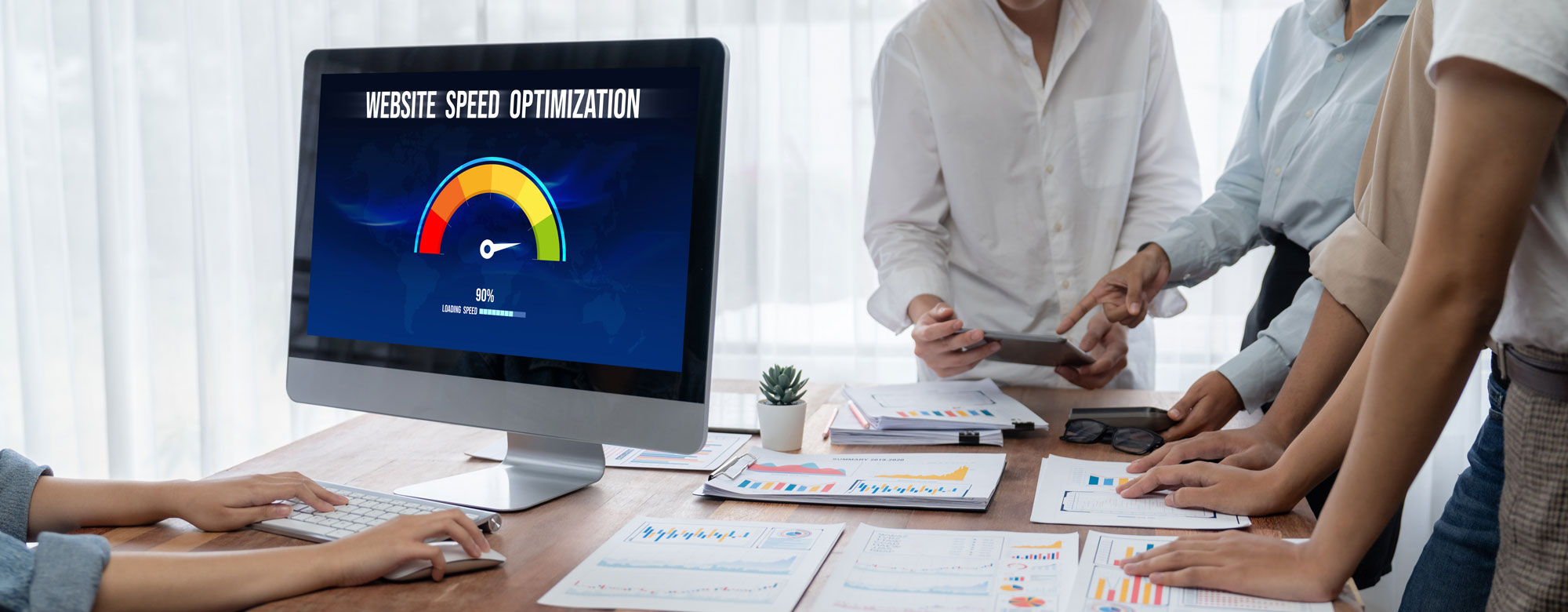
The Strategic Investment in Infrastructure
Speed and performance aren’t free. When you’re looking at how much web design costs in Calgary in 2026, a large portion of that investment goes into the “engine” under the hood.
Our Performance Framework for 2026:
Lightweight Foundations: We use a streamlined stack—WordPress + Elementor, but built on the Astra base with custom code to strip out the bloat.
Edge Caching: We use LiteSpeed Cache and local Canadian servers to reduce “latency.”
Visual Efficiency: We use “Warm Minimalism”—clean lines, soft tones, and high-impact typography. This looks premium and ensures the browser doesn’t have to work overtime to render the page.
4. The "Invisible" UI: Designing for AI Agents and SGE
This is the most technical, yet most critical, trend for 2026. We are no longer just designing for humans; we are designing for AI agents that “read” your site to give answers to users.
The Rise of Search Generative Experience (SGE)
Google’s search results are now dominated by “AI Overviews.” When someone asks an AI, “What’s the best web design agency in [your city] for small businesses?” the AI doesn’t “look” at your site’s colors. It reads your Structured Data.
Schema Markup as a Sitemap: Schema is the code that tells Google’s AI exactly what your page is about. If your page is a service page but the code says it’s a blog post (a common mistake), you are confusing the AI. We ensure your main service pages are correctly tagged as
ServicePageto trigger local “near me” recommendations.Semantic Hierarchy: Your site’s heading structure (H1, H2, H3) must be organized like a well-written textbook. If the structure is logical, the AI can easily summarize your services for a user.
Designing for "Zero-Click" Authority
Many users now get their answers directly on the Google search results page. While some agencies call this “lost traffic,” we call it an Authority Win. If your name, your 5-star rating, and your “Real Strategy” messaging are clear in the AI summary, you’ve won the lead before they even click.
Actionable Strategy for AI-Readiness:
Data Fact Blocks: We use clear tables and bulleted lists to present pricing, service areas, and timelines. AI models love structured data because it’s easy to scrape and summarize.
Advanced Local Schema: We go beyond the basics. We use “LocalBusiness,” “AreaServed,” and “ServiceType” schema to feed the AI exactly what it needs to recommend you over a national competitor.
5. Conversion-Led Strategy: Real Strategy Over "Pretty" Pages
The final and most important trend in 2026 is the total shift from “Creative-Led” design to “Strategy-Led” design. A website can be breathtakingly beautiful and still be a total failure if it doesn’t convert a visitor into a paying client.
The Psychology of the local Buyer
Nowadays, business owners are practical. They are tired of “fancy” marketing speak and “digital” buzzwords. They want to know: Can you solve my problem? Have you done it before? Can I trust you?
A high-converting 2026 site follows this specific path:
The 3-Second Hook: State exactly what you do and who you help, right away (e.g., “Family Lawyer Helping You Navigate Divorce and Custody Matters”). Visitors should immediately know they’re in the right place.
The Evidence Stack: Support that message with real proof. This could include case outcomes (where appropriate), client testimonials, years of experience, or specific examples of situations you’ve successfully handled. The goal is to show—not just say—that you can deliver results.
The Frictionless CTA: Move away from generic “Contact Us” buttons. Use clear, intent-based calls to action that match where the user is in their decision-making process. For example, on a service page, “Book a Consultation” or “Speak With a Lawyer Today” feels direct and helpful, while on an information page, “Get Answers to Your Situation” can feel more approachable.
Building a Lead-Generation Machine
A website should be a living asset, not a static project. By using real-world data and heat-mapping, we can see where users are clicking and where they are getting stuck. This iterative approach is what separates a professional agency from a $500 freelancer. If you’re getting traffic but no phone calls, it’s time to look at the “conversion friction” on your site.

The "How-To": Implementing the 2026 Redesign
Knowing the trends is one thing; implementing them is another. If you are preparing for a site overhaul, here is the technical checklist we use at Imagine Designs & Marketing to ensure a site isn’t just modern, but profitable.
Step 1: The Content Audit (The "Real People" Foundation)
Before you look at a single design layout, you must audit your assets. Do you have real photos of your team? Do you have written case studies that highlight specific location projects? If the answer is no, your design will be hollow. We start by gathering “Evidence.”
Step 2: Architecture for the "Invisible" UI
We map out the site’s semantic hierarchy. This means planning every H1 and H2 tag to answer a specific search intent. We also map out the Schema requirements for every page. If it’s a city service page, it gets Service schema. If it’s a contact page, it gets LocalBusiness schema with geo-coordinates.
Step 3: Performance Engineering
We don’t just “install a theme.” We build the site on a “Staging” server where we can test every plugin for speed. We prioritize the “Critical Rendering Path,” ensuring that the most important information loads first. This is how we achieve the sub-second load times required for 2026.
Step 4: Conversion Optimization (The Strategy Layer)
We design with “Conversion Paths” in mind. This means every page has a clear purpose. We use contrasting colors for CTA buttons and ensure that the “Evidence Stack” (testimonials and case studies) is always within one scroll of a value proposition.
Why Your Local Reputation Depends on Your Web Design
In any city, word of mouth is powerful. But in 2026, word of mouth almost always leads to a Google search. If someone recommends your business at a local networking event, the first thing the potential client will do is look you up.
If they find a site that is slow, looks generic, or uses stock photos, they will feel a “trust gap.” They will wonder if your business is as professional as the person who recommended you. Your website is the “Digital Proof” of your physical reputation.
The Imagine Designs & Marketing Difference
We aren’t just a design agency; we are your strategic partner. We know that “Real Results” come from a combination of technical excellence and a deep understanding of human psychology.
All five of the trends discussed today—Authenticity, Hyper-Locality, Performance, AI-Readiness, and Conversion Strategy—are built into our core web design service. We don’t just build websites; we build lead-generation machines that reflect the quality and integrity of your brand.
The Path Forward for 2026
The 2026 market is competitive, but it’s also full of opportunity for those who are willing to move past the “pretty brochure” mindset. By embracing evidence-based design, hyper-local personalization, and high-performance technical standards, you position your business as the authoritative, trusted choice for local customers.
Stop letting your website be a “digital ghost town.” It’s time to build something that reflects the quality of your work and the reality of our city. Real strategy. Real people. Real results.